
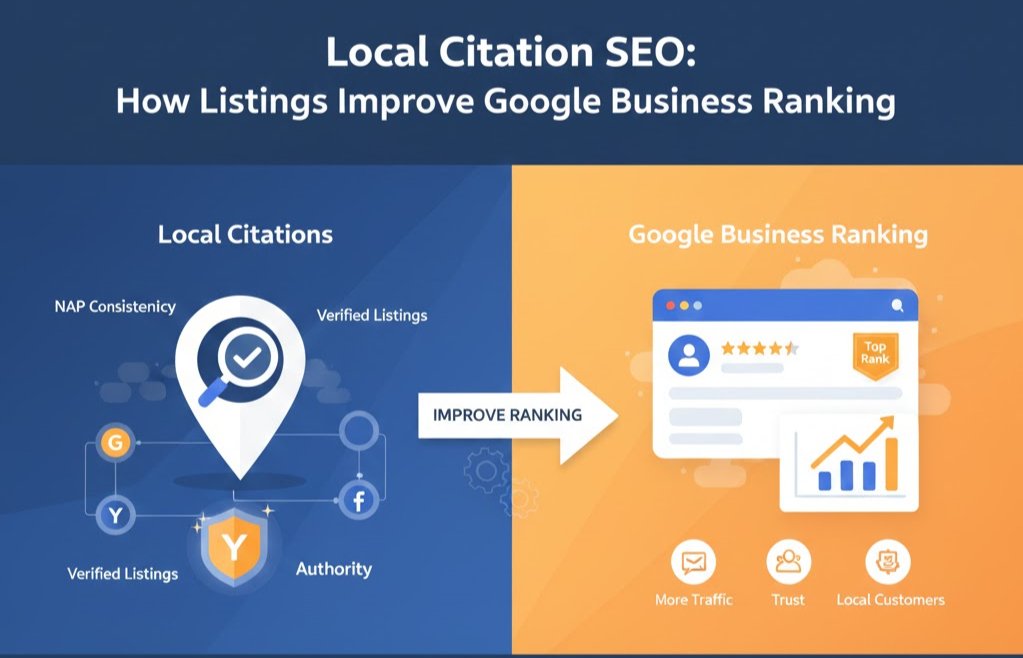
Effective Local Citation SEO: How Listings Improve Google Business Ranking is often the unseen bedrock of successful regional expansion. For over 13 years, Backlink Engines has helped businesses worldwide leverage structured citations to boost their local authority and Google visibility, and in this guide, we break down everything you need to know about citations—from NAP consistency to advanced regional strategies.
The Unseen Power of Local Citations in Modern SEO
Local citations—any mention of your business name, address, and phone number (NAP) on a website—are a core factor in Google’s local ranking algorithms. Unlike traditional backlinks, citations primarily signal trustworthiness, consistency, and geographic relevance. For international brands or multi-location businesses, local citations create a framework that Google can use to verify your presence in specific regions.
Consider the USA and Canada, where platforms like Yelp and Better Business Bureau act as authoritative trust signals. In Europe, directories must account for GDPR compliance, ensuring businesses only share verified and permitted data. Meanwhile, in Japan and Singapore, local directories like Yahoo Japan Business Listings or Singapore’s Streetdirectory provide competitive advantages, particularly in highly localized searches. Emerging markets like India and Indonesia show that mobile-first citations dominate search visibility, emphasizing the need for regional awareness in citation strategy.
By understanding this foundational role of citations, brands can avoid one of the most common pitfalls in local SEO: inconsistent information across directories.
Self-link reference: For businesses ready to implement a comprehensive citation strategy, this deep dive is essential reading: Local Citation SEO: How Listings Improve Google Business Ranking.
Understanding NAP Consistency: The Key Local Ranking Signal
NAP consistency—ensuring your Name, Address, and Phone number are identical across all listings—is the cornerstone of local SEO. Google’s Pigeon update specifically enhanced the algorithm’s ability to cross-reference citations, penalizing businesses with inconsistent information or duplicates.
For example, submitting your business to Yellow Pages correctly establishes a high-authority citation foundation: Boost Your Rankings with Yellow Pages Submission in SEO. A single mismatch—like “St.” vs. “Street”—can dilute your authority signals.
NAP consistency is crucial for multiple reasons:
- User trust: Customers rely on accurate contact info.
- Algorithmic validation: Google cross-checks citations across hundreds of directories.
- Avoiding penalties: Duplicate or incorrect listings can suppress rankings.
To maintain global relevance, consider region-specific rules:
- Germany: Ensure addresses match the local postal format for GDPR compliance.
- Japan: Verify entries in non-Latin characters to maintain accuracy in local search.
- India: Mobile-first citations dominate, so ensure your phone numbers are accessible and clickable for mobile users.
Auditing NAP consistency is not just good practice—it is a strategic necessity for businesses seeking high local visibility.
Beyond the Backlink: How Citations Directly Improve Google Business Ranking
While traditional backlinks pass link equity, citations contribute data-driven authority. Google uses these signals in its Knowledge Graph to verify factual information about a business, making citations indispensable for Google Business Profile ranking.
Contrast this with generic directories or classifieds:
Directory Submissions vs Classifieds: What’s Better for SEO. Citations are structured and permanent; classifieds may offer temporary exposure but do not carry the same verification weight.
Citations impact rankings through:
- Trust Signals: Google recognizes authoritative listings like BBB in the US or Yell in the UK as credible sources.
- Geographic Relevance: Listings linked to a city or postal code improve local search alignment.
- Unlinked Mentions: Even when no backlink is present, Google can associate your business with a trusted platform.
For international brands, the strategic deployment of citations is essential. For example, Singaporean businesses often rank higher by using local niche directories, while Canadian enterprises benefit from listings in Yellow Pages Canada or Cylex. This global approach ensures a business doesn’t just appear in search results—it dominates localized rankings.
Building a High-Quality Citation Profile: Audits, Cleaning, and Tiered Submissions
A robust citation strategy involves more than submission; it requires ongoing management, auditing, and prioritization.
Key steps:
- Audit Existing Listings: Identify duplicates, inconsistencies, and outdated data.
- Clean Inaccurate Citations: Merge duplicates, correct errors, and remove inactive accounts.
- Tiered Submission Approach: Prioritize high-authority platforms first (e.g., Yelp, Yellow Pages), then expand to niche and regional directories.
Backlink Engines has repeatedly observed that structured citations outperform transactional classifieds: Boost Your Rankings with Classified Submission in SEO. This is because classified ads often have minimal data verification and short lifespan, while citations remain indexed and authoritative.
Globally, businesses must consider local nuances:
- France & Germany: Use high-DA national directories and comply with strict data laws.
- Australia & Indonesia: Focus on mobile-optimized listings for maximum visibility.
- Japan: Include non-Latin character directories to capture all local search traffic.
Key Differences: Classifieds as Temporary Links vs. Permanent Local Citations
Unlike permanent citations, classified ads are generally temporary, offer limited data validation, and have minimal impact on local ranking: Tips for Effective Classified Ad Submission. Think of classifieds as a supplementary exposure tool rather than a ranking lever.
The Role of Unlinked Mentions and Social Signals in Local SEO
Even unlinked mentions—such as brand references in local blogs or social platforms—signal legitimacy to Google: How to Effectively Post Ads on Classified Submission Sites. Integrating social proof with structured citations can amplify your local authority, particularly in competitive markets like Singapore, the UK, and the USA.
Expanding Your Reach: Moving from Core Citations to Niche and Industry Listings
After establishing a core citation profile, expanding into niche and industry-specific directories accelerates ranking potential. For instance:
- Healthcare practices may target local clinic registries.
- Restaurants can leverage regional food guides and review platforms.
- Tech services might submit to software directories and B2B portals.
This strategy complements content efforts like blog submissions, which create ongoing engagement and topical relevance: Boost Your Rankings with Blog Submission in SEO.
By layering citation tiers—core, niche, and international—you establish a resilient local presence capable of sustaining competitive rankings.
Securing Your Local Advantage and Thriving Globally
Local citation SEO is no longer optional—it is a strategic pillar for global brands targeting regional visibility. Businesses that audit listings, ensure NAP consistency, and pursue high-authority citations across targeted geographies enjoy measurable improvements in Google Business rankings.
Backlink Engines has guided countless enterprises through multi-region citation campaigns, from North America to Singapore, ensuring high-ranking visibility while minimizing data inconsistencies.
Take the first step in securing your local advantage today: Get Free Consultation.
Frequently Asked Questions (FAQs) on Local Citation SEO Strategy
Why is NAP consistency critical for local SEO?
NAP consistency ensures Google can accurately verify your business location and contact details. Inconsistent listings across directories confuse search engines, reducing trust and negatively affecting local rankings. Correct NAP formatting, including spelling, punctuation, and postal codes, is essential to maintain authority across multiple regions.
How do duplicate or inconsistent listings impact my rankings?
Duplicate or incorrect listings dilute ranking signals and confuse potential customers. Google may split ranking authority across entries, lowering overall visibility. Auditing and merging duplicates, correcting inconsistencies, and removing inactive listings ensures your business signals remain authoritative.
What is the difference between a citation and a backlink?
Citations primarily provide business data and trust signals, while backlinks pass link equity. A citation may not include a clickable link but contributes to Google’s verification of your business. Backlinks support SEO more broadly, improving domain authority and driving referral traffic.
Are free directories as effective as paid listings?
High-quality free directories like Yelp or Yellow Pages still provide valuable local SEO signals. Paid listings may offer additional exposure, analytics, or featured placement, but the ranking benefit primarily depends on accuracy, consistency, and authority of the platform, not cost.
How do unlinked mentions influence local search?
Unlinked mentions signal brand awareness and credibility. Google associates mentions with your business entity, contributing indirectly to local ranking authority. Combining structured citations with unlinked brand mentions reinforces legitimacy in competitive markets.
Do reviews affect citation value?
Yes, reviews complement citations by adding social proof. High-quality reviews on authoritative directories strengthen trust signals, improve click-through rates, and influence Google Maps rankings. Regularly managing reviews is integral to a holistic local SEO strategy.
How quickly do citations impact Google Business rankings?
Impact varies, but most businesses observe measurable changes within 4–12 weeks. New or corrected citations take time for indexing, and cumulative authority builds gradually. Consistency and continued audit practices accelerate the effect.
Should I focus on niche directories or general directories?
Both are important. General directories establish foundational authority, while niche directories signal specialized relevance to Google. Combining both maximizes local visibility and positions your business as authoritative within its industry and geography.
How should I manage citations for international or multi-location businesses?
Centralize NAP data, use region-specific directories, and audit each location separately. Address local language requirements, mobile optimization, and compliance (e.g., GDPR in Europe) to ensure each listing accurately represents its regional presence.
What is the single most important factor for improving local rankings with citations?
Accuracy and consistency of NAP across all high-authority directories. Google prioritizes verified and reliable data when ranking businesses locally, making consistent citations the foundation of all successful local SEO strategies.